
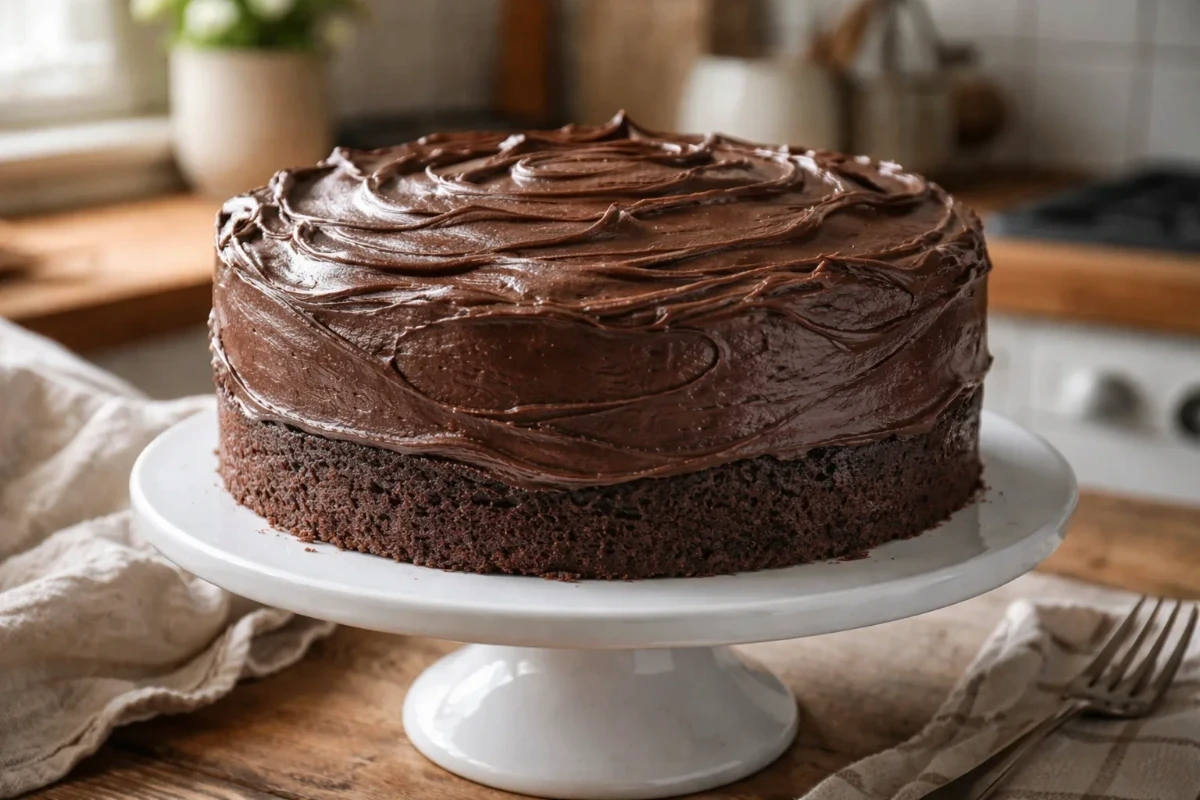
Moist Chocolate Fudge Cake
I’ve been making this chocolate fudge cake for years now, and honestly, it’s the one recipe I come back to whenever someone asks me to bake a birthday cake or bring dessert to a gathering. There’s something about how ridiculously moist it stays—even a couple of days later—that keeps people asking for the recipe. It’s rich, deeply chocolatey, and has this incredible fudgy texture that’s somewhere between a cake and a brownie. I’ve tweaked it over time based on what I’ve learned from my own kitchen disasters and successes, and now it comes out perfect every single time.
This is the chocolate fudge cake recipe I rely on whenever I need a crowd-pleasing dessert that stays soft and rich for days.
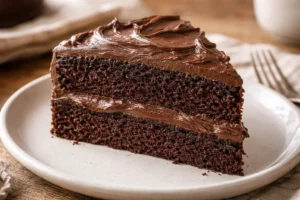
Moist Chocolate Fudge Cake
Ingredients
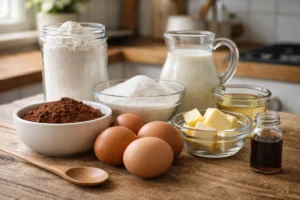
For the cake:
- 1 and 3/4 cups all-purpose flour
- 2 cups granulated sugar
- 3/4 cup unsweetened cocoa powder (not Dutch-processed)
- 2 teaspoons baking soda
- 1 teaspoon baking powder
- 1 teaspoon salt
- 2 large eggs, at room temperature
- 1 cup strong brewed coffee, cooled to room temperature
- 1 cup whole milk, at room temperature
- 1/2 cup vegetable oil
- 2 teaspoons vanilla extract
For the chocolate fudge frosting:
- 1/2 cup unsalted butter, softened
- 2/3 cup unsweetened cocoa powder
- 3 cups powdered sugar
- 1/3 cup whole milk
- 1 teaspoon vanilla extract
- Pinch of salt. If you love this cake, you can find more recipes at /recipes/chocolate-fudge-cakes/.
Instructions
Preheat the oven to 350°F. While you mix the batter, the oven will heat. Thoroughly grease two 9-inch round cake pans, covering every side, then dust them with cocoa powder instead of flour. This prevents a white, floury exterior and boosts chocolate flavor.
Whisk flour, sugar, cocoa powder, baking soda, baking powder, and salt in a large bowl. Sift cocoa if clumpy to avoid lumps in the batter.
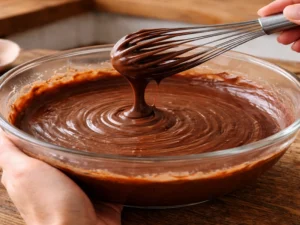
In another bowl, whisk the eggs until they’re a bit frothy, then add the coffee, milk, oil, and vanilla. Here’s where people sometimes panic about the coffee—I promise you won’t taste it in the final cake. It just makes the chocolate flavor deeper and more intense. I’ve used decaf before when I was baking late at night, and it worked just as well. The batter’s going to look really thin and liquid at this point, almost like hot chocolate, and that’s exactly what you want.
Pour the wet ingredients into the dry and mix gently with a spoon or whisk until just combined. Don’t overmix—tiny lumps are fine. The batter will be very runny, almost like pancake batter, which seems odd, but trust me, that’s what makes the cake moist.
Divide the batter evenly in the pans. If precise, use a scale or measuring cup. Bake 30–35 minutes; check at 30 with a toothpick—look for moist crumbs, not wet batter. Tops should set and spring back when touched.
This is important: let the cakes cool in the pans for about 10 minutes after you take them out. I learned this the hard way when I tried to flip one out immediately, only for it to fall apart completely. After 10 minutes, run a butter knife around the edges, then flip them onto a wire rack to cool completely. And I mean completely—if you try to frost a warm cake, your frosting will just melt and slide right off.
While cakes cool, make frosting. Beat butter until creamy, add cocoa, and mix. Add sugar in batches, alternately with milk. Mix in vanilla and salt last.
The frosting should be smooth and spreadable but thick enough to hold its shape. If it’s too thick, add a tiny bit more milk—like a teaspoon at a time. If it’s too thin, add more powdered sugar. I’ve made this frosting in humid weather and dry weather, and sometimes you just need to adjust based on how it looks.
Once your cakes are completely cool, place one layer on your serving plate. I usually put strips of parchment paper under the edges to keep the plate clean while I frost. Spread about a third of the frosting over the first layer, extending to the edges. Place the second layer on top, then use the remaining frosting to cover the top and sides. I’m not fancy with it—I just use a butter knife or offset spatula and spread it around until it looks good.
Equipment Notes
I use pretty basic stuff for this cake—two regular 9-inch round metal cake pans that I’ve had forever, a couple of mixing bowls, a whisk, and measuring cups and spoons. I don’t have a stand mixer, so I do everything by hand with a whisk and wooden spoon, which actually works great for this recipe since you don’t want to overmix anyway. A wire cooling rack is really helpful for letting the cakes cool evenly, and I always keep parchment paper around for lining pans or keeping my serving plate clean while frosting. An offset spatula makes frosting easier, but honestly, a regular butter knife works just fine if that’s what you have.
Tips From My Kitchen
The coffee really does make a difference, even though you can’t taste it. I’ve tried making this with water instead when I ran out of coffee, and it just wasn’t as rich. Room temperature ingredients matter too—cold eggs and milk don’t mix as smoothly into the batter.
This cake actually tastes better the next day after the flavors have had time to settle. I usually make it the night before I need it. Store it covered at room temperature for up to three days, or in the fridge if your kitchen is really warm. Let it come to room temperature before serving if you do refrigerate it.
If you want to make this as a sheet cake instead of a layer cake, pour all the batter into a 9×13-inch pan and bake for 35 to 40 minutes. Then just frost the top when it’s cool.